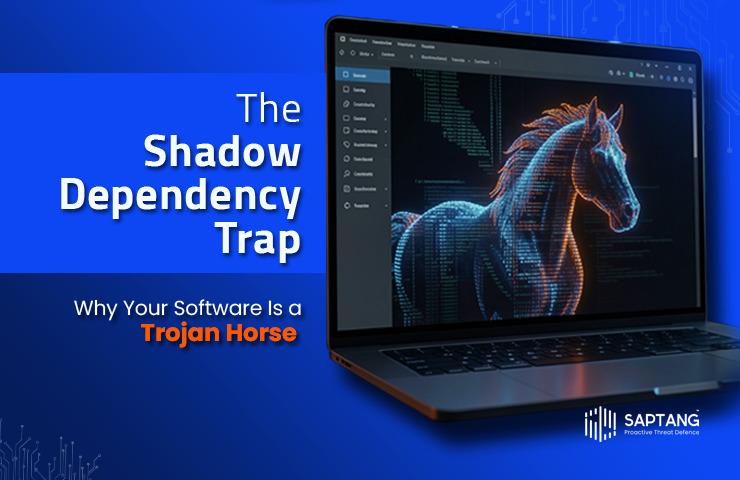
The Shadow Dependency Trap: Why Your Software Is a Trojan Horse 

The Shadow Dependency Supply Chain Risk: When Your Software Becomes the Threat TL;DR  Modern software depends on external libraries, many of which are invisible. This creates Shadow Dependency Supply Chain Risk, where attackers exploit hidden dependencies to enter systems silently. Traditional security tools often miss these threats because they appear as trusted updates, not vulnerabilities.  Introduction 

When Enterprise AI Tools Become Invisible Command-and-Control Infrastructure

When Enterprise AI Tools Become Invisible Command-and-Control Infrastructure TL; DR   Security researchers have discovered a novel attack technique that transforms enterprise AI assistants with web browsing capabilities into covert command-and-control channels. The method requires no authentication, bypasses traditional security controls, and enables bidirectional communication between malware and attackers through platforms your firewall already trusts.  What makes this

From Alert Fatigue to Action: Why CISOs Need Unified External Visibility 

From Alert Fatigue to Action: Why CISOs Need Unified External Visibility  Introduction: When Every Alert Feels Urgent, Nothing Truly Is  A decade ago, a CISO’s biggest challenge was visibility. Today, it is overload. Modern security leaders wake up to dashboards already blinking red. Overnight alerts pile up before the first coffee. Teams race to triage signals that all claim

ML vs Rules: Why Traditional Telecom Security Can’t Scale 

ML vs Rules: Why Traditional Telecom Security Can’t Scale  TL;TR  Telecom security is no longer failing because teams lack expertise or tools. It is failing because the operational model behind rule-based defense cannot keep pace with the speed, scale, and ambiguity of modern telecom networks. Rules were designed for predictability. Today’s threats thrive on subtlety and change. Machine learning