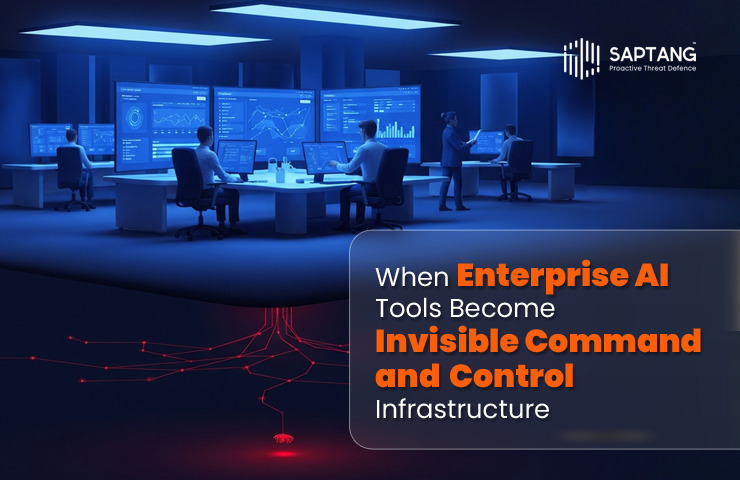
When AI Becomes the Weakest Link in Enterprise Security 

When AI Becomes the Weakest Link in Enterprise Security For most enterprises, the decision to adopt AI did not feel risky. It felt inevitable. Teams experimented with generative tools to improve productivity. Business units adopted AI-driven analytics to accelerate insights. Vendors embedded AI capabilities into platforms that organizations were already using. Over time, AI became

From Bots to Agentic AI: The New Frontier of Autonomous External Attacks

From Bots to Agentic AI: The New Frontier of Autonomous External Attacks    When the Ground Shifts Quietly Beneath Mature Security Programs  Most CISOs today are not struggling with fundamentals.  They have invested years building layered defenses, modernizing SOC operations, improving cloud visibility, and aligning security risk with business priorities. Their programs are audited, benchmarked, and

The AI-Expanded Attack Surface: Every Connected Thing Is a Potential Vector

The Attack Surface No Longer Has Edges and That Is the Enterprise Risk Few Leaders Fully See  Enterprise security strategies were built on a stable assumption for decades: assets are known, environments are bounded, and change is measurable. Security teams catalog systems, apply controls, and monitor activity within a defined perimeter.  That operating model no longer exists.  In 2026,

API Security in Crisis: How Unsecured Endpoints Are Becoming the New Ransomware Vector 

API Security in Crisis: How Unsecured Endpoints Are Becoming the New Ransomware Vector  TL;TR API breaches are accelerating because attackers now treat exposed endpoints as a direct entry point for extortion, service disruption, and data manipulation. Weak authentication, incomplete API inventories, outdated integrations, and unmonitored machine interactions create a perfect environment for ransomware operators. Enterprises