Enterprise Incident Response in the Era of AI Driven Attacks 

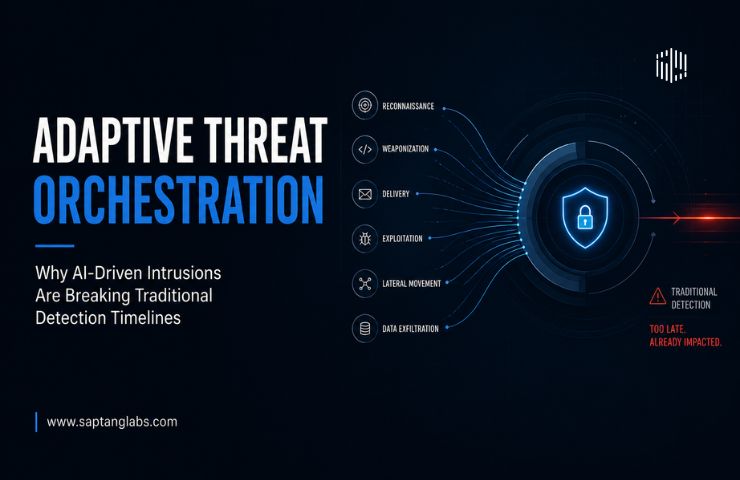
Enterprise Incident Response in the Era of AI Driven Attacks  TL;DR  Artificial intelligence is changing how cyber attacks are executed. Threat actors are now using AI to automate reconnaissance, generate highly convincing phishing campaigns, and adapt malware behavior dynamically. This shift allows attackers to move faster and operate at a scale that traditional enterprise defenses

How Large Language Models Automate Ghidra Firmware Analysis 

How Large Language Models Automate Ghidra Firmware Analysis TL;DR   Recent research demonstrates that Large Language Models can automate firmware vulnerability detection when integrated with Ghidra, the NSA’s open-source reverse engineering framework. The automated pipeline combines EMBA for binary identification, Ghidra for decompilation into pseudo-code, and GPT-based LLMs for vulnerability analysis guided by the OWASP IoT Security Testing Guide. This approach transforms firmware security from

From 48 Hours to Minutes: Why Time-to-Exploit Is Shrinking Faster Than Patch Cycles 

From 48 Hours to Minutes: Why Time-to-Exploit Is Shrinking Faster Than Patch Cycles TL;DR   The window between vulnerability disclosure and active exploitation is collapsing. What once took weeks now happens in 24 to 48 hours for serious vulnerabilities. Security researchers project this timeline will compress to minutes by 2028. Microsoft’s March 2026 Patch Tuesday addressed 78 vulnerabilities

The ClickFix Scam: How Copy-Pasting One Command Steals Your Credentials Through Windows Terminal

The ClickFix Scam: How Copy-Pasting One Command Steals Your Credentials Through Windows Terminal TL;DR   Microsoft disclosed a sophisticated social engineering campaign this week that tricks users into executing malicious commands through Windows Terminal. The attack, called ClickFix, displays fake CAPTCHA or verification pages claiming users need to verify they are human. Instructions tell users to press Windows+R, type cmd, paste a command,