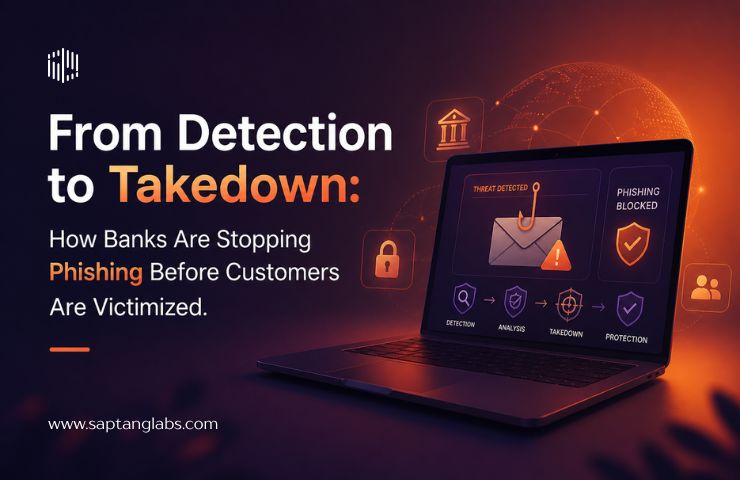
From Detection to Takedown: How Banks Are Stopping Phishing Before Customers Are Victimized 

From Detection to Takedown: How Banks Are Stopping Phishing Before Customers Are Victimized TL;TR  Modern bank phishing prevention has shifted from reactive “whack-a-mole” tactics to proactive, evidence-led takedown processes. By identifying brand impersonation early and automating the collection of forensic evidence, financial institutions are now able to dismantle fraudulent infrastructure in hours rather than days, significantly reducing
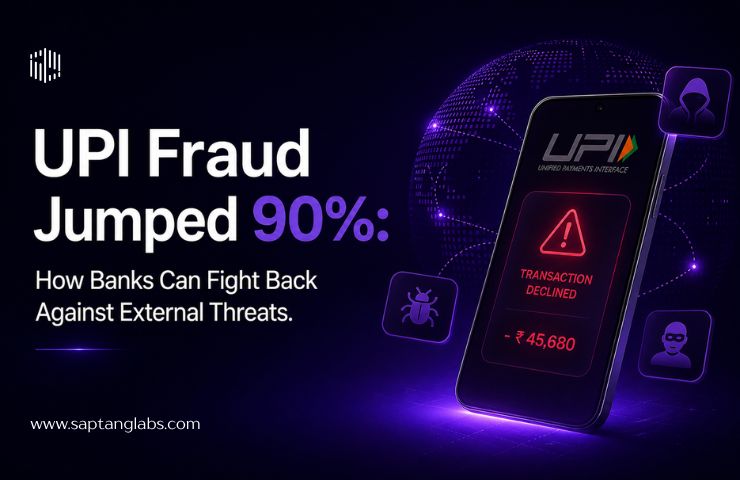
UPI Fraud Jumped 90%: How Banks Can Fight Back Against External Threats

UPI Fraud Jumped 90%: How Banks Can Fight Back Against External Threats TL;DR  The meteoric rise of Unified Payments Interface (UPI) has been matched by a 90% surge in sophisticated fraud. From social engineering to malicious screen-sharing apps, external threats are evolving faster than traditional reactive defenses. This article explores why the “human firewall” is failing, the specific mechanics

VibeCrime Attacks: How Autonomous AI Systems Conduct Complex Cyber Operations Without Human Direction

VibeCrime Attacks: How Autonomous AI Systems Conduct Complex Cyber Operations Without Human Direction TL;DR  VibeCrime Attacks are a new class of cyber threats where autonomous AI systems plan, execute, and adapt attacks without human control. These systems learn from environments, evolve strategies in real time, and operate at machine speed. For CISOs, this changes detection, response, and governance. Security

AI Checking AI: Why Enterprise Needs Guardian Agents Before Autonomous Systems Run Wild 

AI Checking AI: Why Enterprise Needs Guardian Agents Before Autonomous Systems Run Wild TL;DR  The transition from passive chatbots to autonomous AI agents creates a massive “governance gap” in the enterprise. To prevent hallucinations, data leakage, and “agentic drift,” companies must implement a dual-layer architecture: Guardian Agents that monitor, validate, and constrain primary AI agents in