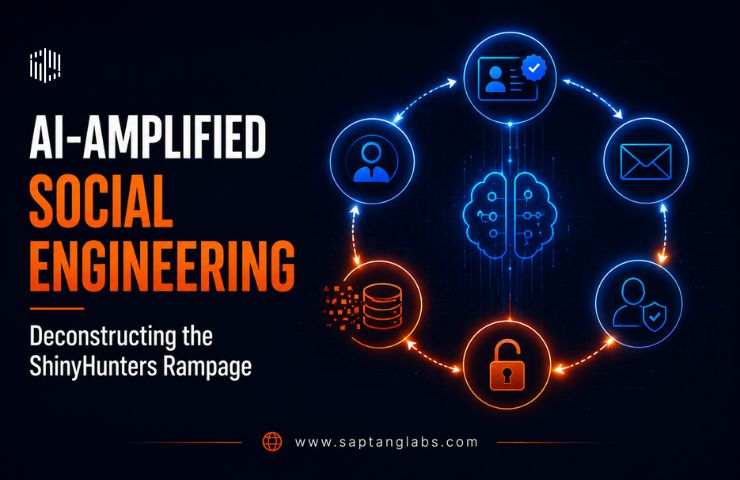
AI-Amplified Social Engineering: Deconstructing the ShinyHunters Rampage

AI-Amplified Social Engineering: Deconstructing the ShinyHunters Rampage  TL;DR The cybersecurity landscape of May 2026 has been permanently altered by a relentless series of high-profile corporate breaches. The extortion group ShinyHunters orchestrated these devastating attacks. By deploying AI-Amplified Social Engineering, these threat actors successfully bypassed traditional multi-factor authentication. Crucially, they compromised massive organizations, including Carnival Corporation, Instructure Canvas, and Charter Communications. Instead of

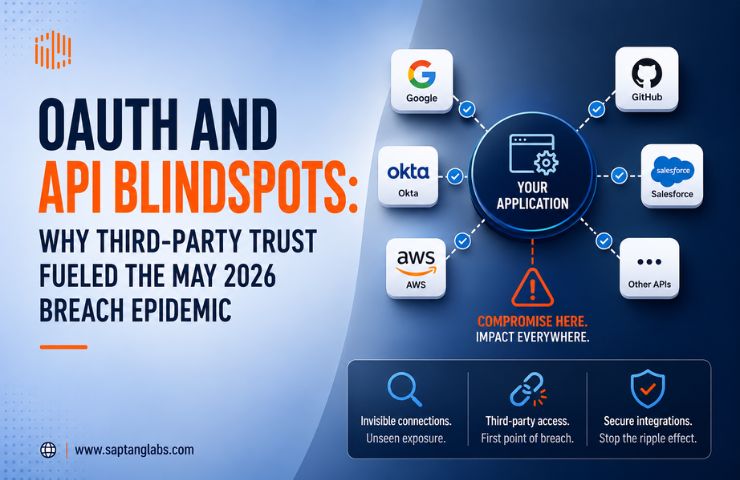
OAuth and API Blindspots: Why Third-Party Trust Fueled the May 2026 Breach Epidemic 

OAuth and API Blindspots: Why Third-Party Trust Fueled the May 2026 Breach Epidemic TL;DR The cybersecurity landscape has fundamentally shifted, as evidenced by the massive supply chain breaches dominating the headlines in May 2026. The traditional network perimeter is completely dead, replaced by a complex web of third party integrations, productivity applications, and artificial intelligence tools. This hyper connected architecture has created

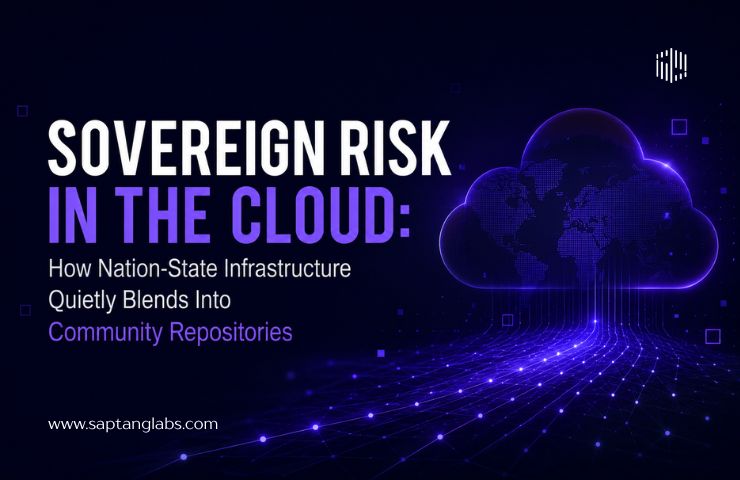
Sovereign Risk in the Cloud: How Nation-State Infrastructure Quietly Blends Into Community Repositories 

Sovereign Risk in the Cloud: How Nation-State Infrastructure Quietly Blends Into Community Repositories TL;TR The modern cloud is built on the labor of thousands of anonymous contributors. This openness has become a strategic backdoor for nation-state actors who contribute code, maintain libraries, and offer “free” infrastructure tools that subtly align with geopolitical objectives. By embedding sovereign risks into community repositories, these

The AI-Expanded Attack Surface: Every Connected Thing Is a Potential Vector

The Attack Surface No Longer Has Edges and That Is the Enterprise Risk Few Leaders Fully See  Enterprise security strategies were built on a stable assumption for decades: assets are known, environments are bounded, and change is measurable. Security teams catalog systems, apply controls, and monitor activity within a defined perimeter.  That operating model no longer exists.  In 2026,