
TL;TR
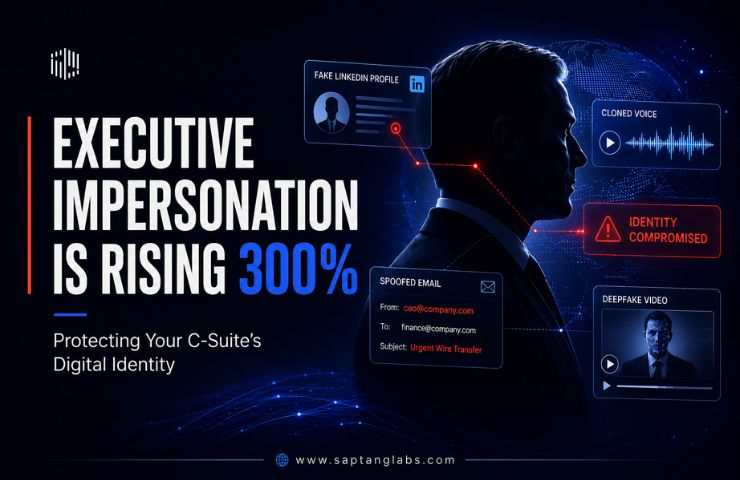
The digital identity of the C-suite has become the primary attack surface for modern cybercriminals, with executive impersonation attempts surging by 300%. Attackers are moving beyond basic phishing to high-fidelity deepfakes and social engineering. To defend against these threats, organizations must move from reactive cleanup to proactive “Brand Guardian” strategies, combining digital footprint minimization with real-time identity monitoring.
In my years as a digital brand guardian, I have seen the battlefield shift. We used to spend our days hunting for counterfeit products or leaked documents. Today, the most valuable “product” we protect isn’t a physical item or a secret recipe; it is the digital persona of our leaders.
When a CEO’s digital identity is hijacked, it isn’t just a personal privacy issue for that executive. It is a direct assault on the company’s financial stability and market trust. Imagine receiving a high-priority video message from your CEO, their voice sounding perfect and their face clearly visible, instructing you to authorize an urgent acquisition payment to a foreign account. In today’s world, there is a 300% higher chance than just a few years ago that this message is a fabrication. This isn’t science fiction; it is the daily reality of modern executive targeting.
Why are we seeing such an explosion in this specific type of fraud? The answer lies in the democratization of technology. Sophisticated tools that once required a nation-state’s budget are now available as monthly subscriptions on the dark web.
The 300% rise is a wake-up call. The perimeter has moved from the office server to the CEO’s personal social media presence and public digital footprint.
We have entered the era of the “Deepfake Dilemma.” In previous years, executive impersonation was mostly limited to “Business Email Compromise” (BEC)—an email with a slightly misspelled domain name. Today, the attacks are multi-modal.
A “Brand Guardian” like Vikram doesn’t just look for fake emails. We look for synthetic personas. Attackers are now creating entire fake LinkedIn profiles that mirror a CEO’s history, connecting with employees over weeks to build a “slow-burn” trust before asking for sensitive information.
The biggest vulnerability for a C-suite executive is often the overlap between their private life and their professional persona. Attackers often find their “in” through an executive’s family member’s social media or a personal home security device that hasn’t been updated.
Effective protection requires a “Vigilant Narrative.” This means educating leaders that their digital identity is a corporate asset. We must implement digital hygiene that feels like a shield, not a burden.
Technological shields are vital, but the ultimate defense is a human one. We need to empower employees at every level to pause. If a request from the C-suite feels unusual; even if it looks and sounds exactly like them, and there must be a culture that rewards the employee for taking ten seconds to verify it.
The “Brand Guardian” approach isn’t about creating paranoia; it is about creating resilience. By securing the digital identities of our leaders, we aren’t just protecting individuals; we are safeguarding the integrity of the entire organization’s voice in a world where that voice is under constant attack.
What is the most common sign of an executive impersonation attempt?
The hallmark is always “unusual urgency.” If a high-ranking leader suddenly requests a bypass of standard financial protocols or asks for secrecy regarding a transaction, it is almost certainly a fraud attempt.
How can I tell if a video of a CEO is a deepfake?
Look for “micro-glitches.” These include unnatural blinking patterns, blurring around the edges of the mouth during speech, or lighting on the face that doesn’t match the background environment. However, as AI improves, these signs are becoming harder to spot.
Is social media the primary source of data for attackers?
Yes. LinkedIn, X (formerly Twitter), and corporate “About Us” pages provide the roadmap for an attacker to understand an executive’s role, their writing style, and their professional network.
Does two-factor authentication (2FA) stop these attacks?
Standard SMS-based 2FA is vulnerable to SIM-swapping. For C-suite protection, hardware-based security keys (like Yubikeys) are the gold standard because they cannot be intercepted by a remote attacker.
What should I do if I suspect my identity is being used to impersonate me?
Immediately alert your internal IT and security teams. Change all passwords using a clean device, and issue a verified internal statement to your organization alerting them that any “urgent” requests in the near future must be verified through a specific, secure channel.
You may also find this helpful insight: Sovereign Risk in the Cloud: How Nation-State Infrastructure Quietly Blends Into Community Repositories