TL;DR
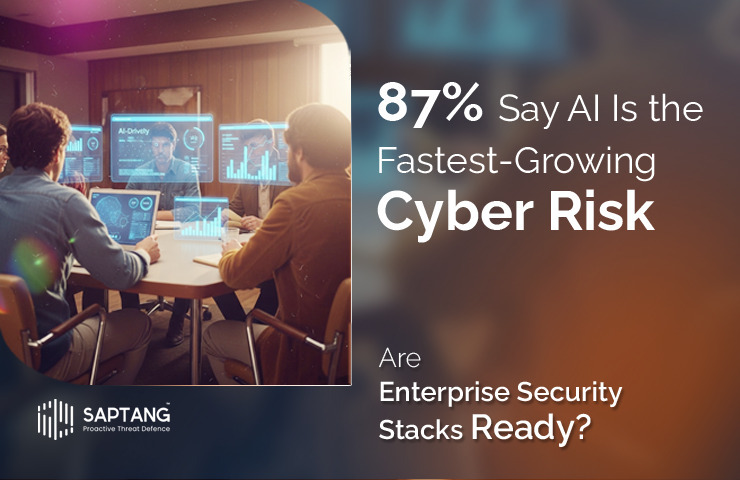
The World Economic Forum’s Global Cybersecurity Outlook 2026 surveyed 804 cyber leaders across 92 countries and found that 87% identify AI vulnerabilities as the fastest-growing cyber risk. Yet only 64% are assessing AI security before deployment, and 47% have no security controls on generative AI platforms.
The disconnect: While enterprises invest heavily in traditional security controls, external threats accelerate faster than internal defenses can respond. CEOs worry about fraud, CISOs focus on ransomware, but the real battle happens in spaces neither can see without external threat intelligence.
The opportunity: Organizations bridging the cyber equity gap through external threat monitoring gain competitive advantage. Those relying solely on perimeter defense fall further behind as AI-powered attacks exploit blind spots in traditional security stacks.
Every January, the World Economic Forum publishes its Global Cybersecurity Outlook. Security leaders worldwide wait for this report because it represents the most comprehensive assessment of enterprise cyber threats available. This year’s findings carry particular weight.
The 2026 report surveyed 804 qualified respondents across 92 countries, including 316 CISOs and 105 CEOs from organizations of all sizes. What they revealed should concern every enterprise leader, particularly in India where rapid digital transformation collides with accelerating cyber threats.
The headline finding is stark: 87% of respondents identify AI vulnerabilities as the fastest-growing cyber risk facing enterprises. This is not about hypothetical future threats. These leaders are describing what they see happening right now in their organizations.
But the report reveals something more troubling than just rising threats. It exposes a widening gap between organizations that are cyber-resilient and those falling behind. This cyber equity gap determines which enterprises will thrive and which will struggle as AI-powered attacks become the norm.
The Numbers That Define the Crisis
Understanding the scale of the problem requires examining the specific findings that paint a picture of enterprises racing to defend against threats they barely understand.
While 87% recognize AI vulnerabilities as the fastest-growing risk, actual implementation of AI security measures lags dramatically. Only 37% of organizations assessed AI security implications before deployment in 2025. That number is expected to rise to 64% in 2026, but this still leaves more than one-third of enterprises deploying AI with no security assessment whatsoever.
Even more concerning, 47% of organizations have no security controls on their generative AI platforms. These enterprises use AI for productivity, development, and business operations while providing attackers with unmonitored access to sensitive data and systems.
The gap between awareness and action creates the fundamental vulnerability. Knowing threats exist provides no protection if organizations fail to implement appropriate defenses.
Cyber threats are no longer abstract business risks. They affect individuals directly. The WEF report found that 73% of respondents were personally affected by cyber-enabled fraud in 2025. This represents cyber leaders, the people supposedly best equipped to defend themselves, falling victim at scale.
When security professionals cannot protect themselves, the implications for general employee populations become clear. Credential theft, identity fraud, and financial scams now target everyone, and traditional security awareness training provides insufficient defense.
For large organizations, 65% identify supply chain cyber risk management as their biggest challenge. This finding has particular relevance for Indian enterprises deeply embedded in global supply chains as service providers, manufacturers, and technology partners.
Every third-party relationship creates potential exposure. Software vendors, cloud service providers, contractors, and partners all represent attack vectors that internal security controls cannot fully address. Organizations need visibility into external threats affecting their entire ecosystem.
One of the most revealing findings in the WEF report is the divergence between what CEOs worry about and what CISOs prioritize. Understanding this disconnect explains why many security investments miss their mark.
CEOs focus on fraud and financial crime. They see direct financial losses, customer impact, and reputational damage from fraud attacks. These threats are visible, measurable, and directly affect business operations that CEOs are accountable for.
CISOs focus on ransomware and infrastructure attacks. They measure threats by technical impact, system availability, and data protection. Ransomware represents the nightmare scenario where everything stops working simultaneously.
Both are correct, and both are incomplete. Modern attacks blend fraud and infrastructure compromise. Attackers steal credentials to commit fraud, then deploy ransomware to cover their tracks. They exploit supply chain relationships to access financial systems. The artificial separation between fraud and technical attacks creates blind spots that sophisticated threat actors exploit.
Effective defense requires alignment between executive leadership and security teams around a unified understanding of the external threat landscape. This is where external threat intelligence becomes essential. It provides the common operating picture both CEOs and CISOs need.
Perhaps the most concerning finding in the WEF report is the growing divide between cyber-resilient organizations and everyone else. This is not just about technology. It reflects fundamental differences in approach, resources, and strategic thinking.
Organizations with cyber resilience share common characteristics:
Organizations falling behind share different patterns:
The gap widens because threats accelerate faster than traditional security approaches can adapt. Organizations investing in external threat intelligence pull ahead. Those relying solely on reactive, internal-focused security fall further behind with each passing quarter.
The WEF findings have particular significance for Indian organizations navigating unique challenges at the intersection of rapid growth and evolving threats.
India’s digital economy is expanding faster than almost anywhere globally. Financial inclusion drives millions of new users to digital services monthly. The government’s push for digital infrastructure creates enormous opportunities alongside significant security challenges.
Indian enterprises occupy critical positions in global supply chains, particularly in IT services, software development, and business process outsourcing. The 65% of large organizations identifying supply chain cyber risk as their biggest challenge includes many who depend on Indian partners. Every compromise of an Indian service provider potentially affects dozens of global clients.
The AI adoption curve in India is steep. Organizations race to deploy AI for competitive advantage while often lacking the security expertise to assess risks properly. The 47% with no security controls on generative AI platforms likely includes significant representation from Indian enterprises eager to leverage AI but uncertain how to secure it.
Indian organizations have an opportunity to bridge the cyber equity gap through strategic investments in external threat intelligence. Rather than following the same path that left many Western enterprises vulnerable, Indian companies can leapfrog to modern security approaches built around external visibility from day one.
Q1: Why is external threat monitoring more important than internal security controls?
Both are essential, but external monitoring addresses threats before they reach your perimeter. Internal controls respond to attacks already underway. External threat intelligence detects when your credentials appear on dark web marketplaces, when attackers discuss targeting your organization, and when vulnerabilities in your supply chain create exposure. This advance warning enables proactive defense rather than reactive incident response.
Q2: How do organizations assess AI security before deployment?
Effective AI security assessment includes evaluating what data the AI can access, how credentials are managed, whether the platform has been independently audited, what happens if the AI is compromised, and how to monitor for misuse. Organizations should also consider supply chain risks from AI vendors and ensure external monitoring detects if AI-related credentials are exposed.
Q3: What is the cyber equity gap and why does it matter?
The cyber equity gap describes the widening divide between organizations with strong cyber resilience and those falling behind. It matters because this gap directly affects competitiveness, customer trust, and survival. Organizations on the wrong side of the gap face higher breach costs, longer recovery times, and difficulty attracting customers who prioritize security. The gap widens because leading organizations continuously improve while others remain reactive.
Q4: How can mid-sized organizations bridge the gap without Fortune 500 budgets?
External threat intelligence platforms like Saptang Labs provide enterprise-grade monitoring at accessible price points. Rather than building internal capabilities requiring specialized expertise and infrastructure, mid-sized organizations can deploy cloud-based monitoring that provides immediate visibility. Focus on external monitoring, credential exposure detection, and supply chain intelligence delivers maximum security impact per dollar invested.
Q5: What should be the first step for organizations realizing they are behind?
Start with external threat assessment. Discover what credentials associated with your organization are already circulating on dark web marketplaces. Identify which third-party relationships create the most exposure. Understand what attackers can see when they scan your external infrastructure. This baseline assessment reveals where you are most vulnerable and allows you to prioritize investments that close the biggest gaps fastest.
How Saptang Labs Helps Enterprises Bridge the Cyber Equity Gap
The WEF Global Cybersecurity Outlook 2026 makes clear that traditional security approaches cannot keep pace with AI-powered threats and supply chain risks. Organizations need visibility beyond their perimeters into the external threat landscape where attacks originate.
Saptang Labs provides the external threat intelligence that bridges the gap:
Discover where your organization stands relative to the cyber equity gap. Contact Saptang Labs for an external threat assessment that reveals what attackers already see. Visit saptanglabs.com or email sales@saptanglabs.com to start bridging the gap today.
You may also find this insight helpful: How Opening a GitHub Repo Can Now Steal Your Credentials: The AI Supply Chain Wake-Up Call