TL;DR
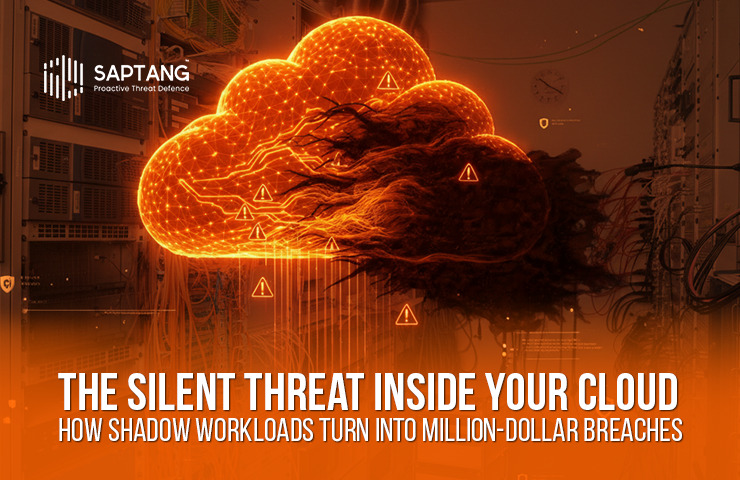
The proliferation of shadow workloads; unmonitored or undocumented machine identities, microservices, and containers; is creating the largest, most volatile attack surface inside enterprise cloud environments. Driven by rapid DevOps velocity and fragmented governance, these silent assets are not just technical debt; they are unsecured backdoors that attackers exploit for lateral movement and data exfiltration. Traditional perimeter security fails here because the threat is already inside. To protect revenue and ensure cloud resilience, CISOs and executives must adopt a proactive intelligence framework that brings full visibility and automated governance to every machine identity.
For years, the cybersecurity conversation centered on securing the perimeter. Today, that perimeter has dissolved. The true battleground is deep within your multi-cloud environment, fought not over firewalls, but over the identities of machines and applications.
Imagine auditing a major enterprise campus, only to discover that 20% of the doors have no locks, no records, and were installed by temporary contractors who left six months ago. That is the reality of the Shadow Workload Crisis.
Shadow workloads are unmanaged, non-human identities; service accounts, forgotten containers, unmonitored serverless functions, and abandoned tokens; that execute code and hold permissions, often with excessive privileges. They are the inevitable byproduct of rapid DevOps velocity and fragmented governance across AWS, Azure, and GCP.
This isn’t a failure of engineering; it’s a failure of strategic oversight that transforms convenience into catastrophic financial risk. For the C-suite, this silent expansion of unmonitored assets represents the single greatest threat to cloud resilience, leading directly to compliance failures, operational paralysis, and, inevitably, million-dollar breaches.
The Core Problem: Why Shadow Workloads Are the Perfect Launchpad
The danger of shadow workloads is not that they exist, but that they inherently carry high privileges and zero accountability. They are the perfect targets for Advanced Persistent Threats (APTs).
In most modern enterprises, machine identities outnumber human identities by a factor of 10 or 20 to 1. Every microservice, every automated pipeline, and every serverless function is a machine identity requiring permissions. As development scales, the volume of shadow workloads overwhelms security teams using manual tools, creating an unmanageable security footprint.
Shadow workloads are rarely created with the principle of least privilege. They are often provisioned with overly broad permissions (e.g., S3: ReadWrite, AZURE: Contributor) for speed during initial deployment. When the project completes, the permissions remain. This forgotten, excessive access allows an attacker who compromises one low-priority workload to immediately escalate privileges and move laterally across different cloud environments.
Traditional security tools fail here. Cloud Security Posture Management (CSPM) often misses undocumented or custom workloads. Vulnerability scanners look for software flaws, not identity failures. Furthermore, ownership is ambiguous: since no human actively manages the identity, it falls into a visibility void, lacking consistent monitoring, rotation, or decommissioning.
The core mission of Saptanglabs is to connect proactive intelligence to strategic business outcomes. We translate the technical reality of shadow workloads into the language of the C-suite.
To defeat a silent threat, you must adopt a proactive intelligence mandate that provides the equivalent of X-ray vision inside your cloud environment.
As a leader in Proactive Threat Intelligence, Saptanglabs transforms the management of shadow workloads from a reactive cleanup task into a strategic governance process.
Our expertise starts with complete discovery. We utilize advanced telemetry to map every human, machine, and application identity across your multi-cloud environment, cataloging even the most ephemeral containers and serverless functions that native tools overlook. This eliminates the visibility void instantly.
We move beyond simple “alerting” to provide Risk Quantification. We assign a specific risk score to every shadow workload based on its privilege level, its age, and its deviation from expected behavior. This translates a technical vulnerability into a clear business metric, allowing the C-suite to prioritize remediation based on maximum financial impact reduction.
We enforce least privilege as a principle, not a project. Our platform continuously monitors for privilege inflation, unused access, and anomalous activity. When a workload drifts into a high-risk zone, our automated governance systems can immediately isolate, revoke excessive permissions, or initiate decommissioning—acting instantly to neutralize the threat long before a human team could respond.
The million-dollar breaches of the modern era don’t start at the firewall; they begin with the compromise of a forgotten or over-privileged workload inside your network. The era of believing “everything inside is safe” is over.
To achieve cloud resilience and protect your revenue, you must gain Real-Time Situational Awareness over your internal, non-human perimeter. Stop letting shadow workloads create unsecured backdoors for sophisticated attackers. Embrace the proactive intelligence that turns chaos into control.
Q: What is the difference between a ‘shadow workload’ and a ‘service account’?
A: A service account is a type of machine identity. A ‘shadow workload’ is the broader problem; it refers to any machine identity, service account, container, or function that is unmanaged, undocumented, or unmonitored, regardless of its origin.
Q: Why do traditional IAM tools fail against shadow workloads?
A: Traditional IAM tools were designed primarily to manage human users. They lack the native visibility to track the rapid, ephemeral lifecycle of cloud-native machine identities across multiple disconnected cloud platforms, leaving workloads in the dark.
Q: How does controlling shadow workloads impact compliance?
A: Regulatory frameworks (like SOC 2 and NIST) require strict access control and auditing. By eliminating shadow workloads and enforcing least privilege, you achieve clear, auditable proof of control over your environment, directly reducing compliance risk.
Q: Which identities pose the bigger risk: human or machine?
A: Machine identities pose the biggest uncontrolled risk because they are numerous, often over-privileged, and lack human governance, making them easier targets for lateral movement and persistence.
Don’t Let the Shadow Dictate Your Risk.
The biggest threat to your cloud resilience is the one you can’t see.
Book a Demo: Cloud Workload Assessment with Saptanglabs today. Discover the extent of your shadow workloads and gain the proactive intelligence necessary to secure your internal perimeter.
You may also find this helpful insight: Multi-Cloud, Multi-Risk: Why Identity Drift Is Becoming the Fastest Growing Attack Surface