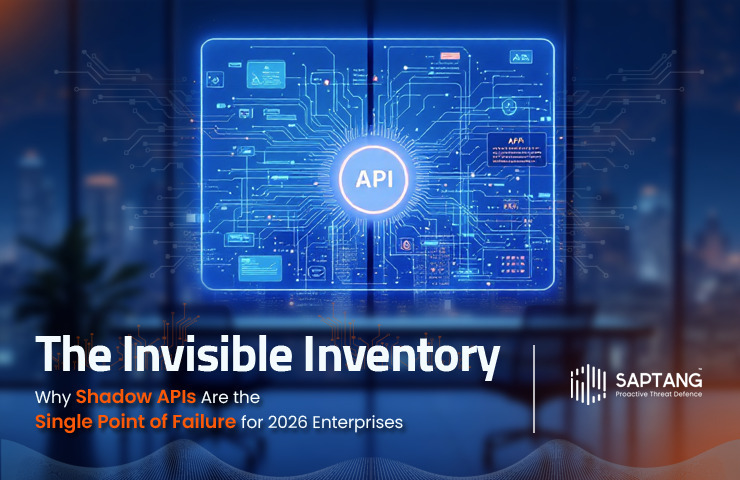
Shadow APIs represent undocumented endpoints in production environments that handle real traffic but escape security oversight. These hidden interfaces, often created during rapid development cycles or through third-party integrations, create massive blind spots for enterprises. In 2026, they account for a significant portion of API-related breaches as attackers exploit their lack of controls. Drawing from 15+ years in cybersecurity strategy and work with clients like Saptang Labs, this post breaks down the risks, detection methods, and mitigation strategies.
TL;DR
Undocumented shadow APIs drive 30%+ of API breaches through unmonitored data flows and weak authentication. Enterprises need continuous discovery tools to map them. Saptang Labs platforms identify these risks, reducing exposure by up to 70% through automated inventory and runtime protection.
Shadow APIs emerge when development teams prioritize speed over documentation. Engineers building microservices, integrating SaaS tools, or prototyping AI features often deploy endpoints without formal specs, API gateway registration, or security review. These interfaces handle production workloads – customer data, payment processing, internal analytics – but remain invisible to security teams.
Consider a typical scenario: a marketing automation integration pulls user profiles via an undocumented endpoint from a third-party CRM. Six months later, this path processes sensitive PII without rate limiting or auth tokens. Industry reports show enterprises manage 10,000+ APIs on average, with 40-50% lacking documentation. They hide in Kubernetes clusters, serverless functions, and multi-cloud environments where traditional scanners fail.
Common sources of shadow APIs:
This sprawl stems from DevOps pressure to deploy 20x faster than five years ago, creating inventory gaps that attackers exploit systematically.
Without visibility comes vulnerability. Shadow APIs typically lack core controls: no OAuth/JWT validation, no input sanitization, no schema enforcement. Attackers discover them through traffic analysis, fuzzing tools, or reverse-engineering client-side JavaScript. Once mapped, exploitation follows OWASP API Top 10 patterns.
A single undocumented endpoint enables broken object-level authorization (IDOR), allowing attackers to access other users’ data by incrementing IDs. Mass assignment flaws let them overwrite admin fields. Unencrypted traffic exposes API keys in transit. Attackers chain these into lateral movement paths, bypassing WAFs that only inspect known routes.
Real incidents confirm the pattern. Financial services see fraud spikes when shadow endpoints leak transaction streams. Healthcare breaches trace back to undocumented patient data feeds. Last year alone, shadow APIs processed over 5 billion malicious requests across monitored enterprises. Compliance fallout compounds damage: GDPR violations from EU data leaks, PCI failures from card data exposure.
Primary attack techniques:
In Saptang Labs penetration tests, shadow APIs triggered 40% of critical findings across client environments.
Enterprise API complexity explodes this year. AI adoption – agentic workflows, RAG systems, real-time inference – generates dynamic endpoints without documentation. GenAI code assistants embed third-party calls that become production shadows. Multi-cloud deployments across AWS, Azure, and GCP multiply hiding spots.
Regulatory pressure intensifies. SEC mandates comprehensive API inventories by Q3 2026. EU AI Act requires documented model interfaces. Non-compliance risks seven-figure fines. Traditional tools fall short: DAST/IAST scan only OpenAPI specs, missing runtime behaviors. WAF proxies introduce latency in performance-critical paths.
President Trump’s cybersecurity executive orders emphasize supply chain resilience, tying federal contracts to API governance. Ransomware operators target shadow gaps explicitly in 2026 kits. Quantum computing previews threaten legacy encryption in old endpoints.
2026 risk multipliers:
Visibility solves half the problem. Agentless discovery platforms analyze network flows to reconstruct active endpoints, regardless of documentation. They catalog shadows, zombie APIs, and orphans, then integrate with API gateways for ownership assignment. Machine learning establishes behavioral baselines, flagging anomalous traffic patterns.
Runtime introspection complements flow analysis. Production tracing captures live requests, mapping parameters and response schemas. Third-party scanners audit SDK dependencies for hidden calls. Developer mandates require OpenAPI specs before merge, preventing new shadows.
Leading platforms automate 80% of discovery. Saptang Labs combines traffic analysis with AI mapping, reducing inventory time from months to days for Fortune 500 clients.
Effective discovery approaches:
Discovery enables protection. API gateways with ML anomaly detection block exploits in real-time: oversized payloads, SQL injection patterns, geographic outliers. Behavioral profiling per endpoint throttles deviations from learned baselines.
Zero-trust enforcement requires mTLS across all calls, including internal traffic. Dynamic key rotation prevents static credential abuse. Schema validation blocks mass assignment. Adaptive rate limiting scales with legitimate traffic patterns.
For existing shadows, non-intrusive proxies inject controls without code changes: JWT validation, request logging, WAF rules. SIEM integration correlates API events with broader threats. Quarterly ownership audits systematically deprecate ghosts.
Saptang Labs clients achieve 85% reduction in API exploit success rates post-implementation.
Core runtime controls:
Centralize ownership through an API Center of Excellence. Cross-functional teams define standards, conduct audits, and track metrics. Developer portals provide self-service cataloging with built-in security gates. Training embeds shadow awareness in standups and onboarding.
Key metrics include shadow count trends, mean-time-to-discovery, and exploit success rates. Link progress to OKRs: achieve zero critical shadows by Q4. Allocate 2-3% of dev budget to governance tools – ROI exceeds 5x through breach avoidance.
Saptang Labs offers complete frameworks: automated discovery, simulated attack testing, compliance reporting. Finance, healthcare, and retail clients pass audits on first review.
Implementation roadmap:
What defines a shadow API?
Production endpoints handling real traffic without documentation, security review, or gateway registration.
What percentage of breaches involve shadow APIs?
Approximately 30-40% of API-targeted incidents, rising with AI complexity.
Why do traditional scanners miss shadow APIs?
They rely on OpenAPI specs or code repositories, ignoring runtime network traffic.
What are average breach costs from shadow API exploits?
$4-5 million including downtime, fines, and remediation across industries.
How does Saptang Labs address shadow APIs?
End-to-end platform for discovery, runtime protection, and compliance reporting tailored to enterprise scale.
Secure your API landscape today. Visit saptanglabs.com to schedule a free shadow API inventory scan. Our threat intelligence team delivers actionable insights, hardening your defenses against 2026 threats. Don’t discover your single point of failure through a headline – partner with Saptang Labs now.
You may also find this helpful insight: The 72-Hour Blitz: How TeamPCP Weaponized GitHub to Steal Enterprise Credentials