TL;TD
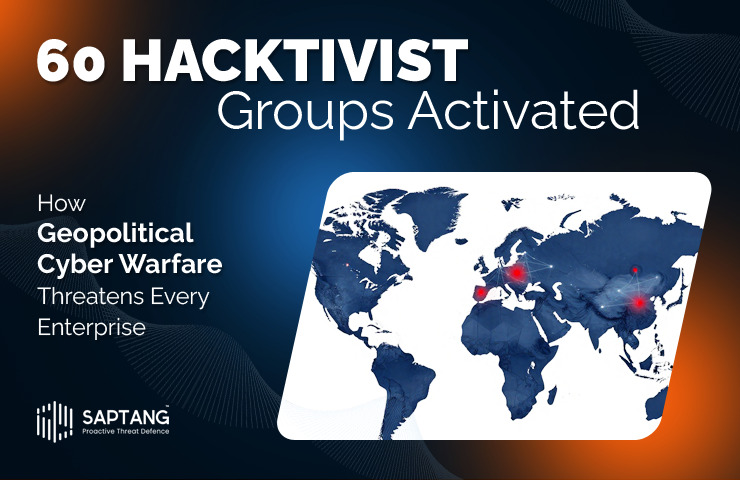
Recent military operations in the Middle East have triggered coordinated cyber retaliation involving over 60 hacktivist groups. Major security vendors including CrowdStrike, Palo Alto Networks, and Sophos issued enterprise warnings within 48 hours. Critical infrastructure across multiple regions has already been targeted, including airports, fuel systems, government networks, and financial institutions.
The enterprise threat: Former intelligence officials warn that every multinational corporation is now at risk. The decentralized nature of hacktivist groups makes attacks more unpredictable. As one expert noted, decisions now rest with teenage hackers in Telegram channels with no oversight or central command.
What this means: Traditional security controls provide no visibility into Telegram coordination channels, dark web planning forums, or target lists circulating among hacktivist groups. Enterprises need external threat intelligence to detect when they appear on target lists before attacks reach their networks.
On February 28, 2026, coordinated military operations began across the Middle East. Within hours, the cyber battlefield activated. By March 1, over 60 hacktivist groups had mobilized through Telegram channels. By March 2, airports, fuel systems, and government networks across multiple countries were under attack.
This is not traditional state-sponsored cyber warfare with clear rules of engagement. This is decentralized retaliation coordinated through encrypted messaging apps, executed by groups ranging from sophisticated state-linked actors to amateur hacktivists seeking revenge.
The targets extend far beyond military and government systems. Critical infrastructure including airports in Bahrain, fuel distribution systems in Jordan, government websites in Kuwait, and banking systems in Saudi Arabia have all been compromised. Each attack demonstrates that civilian and commercial targets are considered legitimate by these groups.
For enterprises, this represents a fundamental shift in threat landscape. Geopolitical conflicts that once seemed distant now directly threaten business operations. Companies with no military or government connections find themselves targeted simply because of their geographic location, customer base, or supply chain relationships.
Understanding how these attacks organize reveals why traditional security approaches provide inadequate defense. The coordination happens entirely outside spaces where corporate security tools operate.
The Telegram Command Structure
Minutes after military operations began, an Electronic Operations Room formed on Telegram. Over 60 hacktivist groups joined, sharing target lists, attack tools, and claiming victories. This coordination platform operates openly yet remains invisible to enterprises lacking external threat monitoring.
Groups range from sophisticated operations with apparent state backing to amateur collectives motivated by ideology rather than expertise. Some focus on DDoS attacks overwhelming websites with traffic. Others deploy ransomware targeting specific organizations. Several specialize in data theft and public exposure of sensitive information.
The most concerning development: Multiple ransomware operators offered their tools for free to any group targeting specific countries or industries. This democratization of advanced attack capabilities means even low-skill groups can deploy sophisticated malware.
Former intelligence officials describe a situation more dangerous than traditional state-sponsored attacks. One expert explained that with leadership structures disrupted, decisions now rest with individual hackers operating with minimal oversight.
Centralized command provides predictability. Military cyber operations follow doctrine, target specific assets, and maintain operational security. Decentralized hacktivist groups follow no rules. A teenager in a Telegram channel can decide to target a hospital, airport, or financial institution based on impulse rather than strategy.
This unpredictability makes threat modeling nearly impossible. Enterprises cannot predict which sectors will be targeted, when attacks will occur, or what methods will be employed. The only certainty is that attacks will continue escalating.
The first 72 hours of coordinated retaliation demonstrate the breadth and sophistication of these attacks. Targets span multiple countries and sectors, revealing a coordinated strategy to maximize economic and psychological impact.
Confirmed attacks include:
Each successful attack emboldens additional groups and attracts new participants to the coordination channels. The victim list grows daily as groups compete for recognition within hacktivist communities.
Former intelligence officials issued stark warnings about enterprise exposure. The assessment is clear: every multinational corporation faces elevated risk during this period of cyber warfare escalation.
The Supply Chain Multiplier
Enterprises rarely operate in isolation. Global supply chains connect companies across borders and sectors. An attack on one organization cascades through its partners, vendors, and customers.
Consider an Indian IT services company supporting clients in affected regions. Or a Dubai-based logistics operation serving global customers. Or a European manufacturer sourcing components from the Middle East. Each represents a potential attack vector.
Hacktivist groups increasingly target supply chains rather than direct victims. Compromising a vendor provides access to dozens of downstream customers. This force multiplier effect explains why small and mid-sized enterprises face the same risks as Fortune 500 companies.
Companies assume physical distance from conflict zones provides protection. This assumption fails in cyber warfare where geography becomes irrelevant.
Indian enterprises serving clients in affected regions become targets. Dubai operations supporting global business face attacks. European companies with Middle Eastern partnerships find themselves on target lists. The digital nature of business creates exposure that physical borders cannot contain.
Hacktivist groups compile target lists based on business relationships, customer bases, and perceived affiliations rather than headquarters location. Any enterprise with connections to affected regions or industries should assume they are being evaluated as potential targets.
Traditional enterprise security investments focus on perimeter defense, internal monitoring, and threat detection within corporate networks. These controls remain necessary but provide no visibility into the external spaces where geopolitical cyber warfare organizes.
Critical gaps in conventional security:
Enterprises discover they are targets only after attacks succeed. By then, websites are defaced, data is stolen, systems are encrypted, and operational disruption has already occurred. The gap between threat emergence and detection can span days or weeks.
Geopolitical cyber warfare requires different defensive strategies than routine threat management. Speed matters. The window between target identification and attack execution can be measured in hours.
Priority actions for the next 48 hours:
These measures do not eliminate risk but significantly reduce exposure and accelerate response when attacks occur.
Q1: How long will this elevated threat period last?
Historical patterns suggest elevated cyber activity continues for weeks or months following military operations. The decentralized nature of current threats makes prediction difficult. Organizations should assume elevated risk will persist and implement sustained monitoring rather than temporary measures.
Q2: Are small and mid-sized enterprises really at risk, or just large corporations?
All organizations face risk during geopolitical cyber warfare. Hacktivist groups often target smaller companies because they typically have weaker defenses and less monitoring. Additionally, attacking supply chain partners provides indirect access to larger organizations. Company size provides no protection.
Q3: What industries face the highest risk?
Critical infrastructure including energy, transportation, healthcare, finance, and telecommunications face elevated targeting. However, any company with operations, customers, or partners in affected regions should consider itself at risk. Hacktivist target selection often reflects opportunity rather than strategic value.
Q4: Can traditional cybersecurity insurance protect against geopolitical cyber attacks?
Many cyber insurance policies contain war exclusions that may apply to state-linked cyber attacks. Organizations should review their policies carefully and understand what coverage exists during geopolitical conflicts. Insurance provides financial recovery but cannot prevent attacks or operational disruption.
Q5: How can we tell if our organization is already on a target list?
Without external threat monitoring, you cannot. Target lists circulate in Telegram channels, dark web forums, and closed hacktivist communities that enterprise security tools cannot access. External threat intelligence platforms monitor these spaces and alert organizations when they are mentioned, discussed, or listed as potential targets.
How Saptang Labs Protects Enterprises During Geopolitical Cyber Warfare
The coordinated hacktivist activity following recent military operations demonstrates why external threat intelligence is essential. Traditional security tools cannot see the spaces where attacks organize, target lists circulate, and coordination happens.
Saptang Labs provides the external visibility enterprises need during geopolitical conflicts:
Do not wait until you are attacked to implement external threat monitoring. Contact Saptang Labs today for immediate assessment of your exposure during this elevated threat period. Visit saptanglabs.com or email sales@saptanglabs.com for urgent consultation.
You may also find the helpful insight: 87% Say AI Is the Fastest-Growing Cyber Risk: Are Enterprise Security Stacks Ready?